
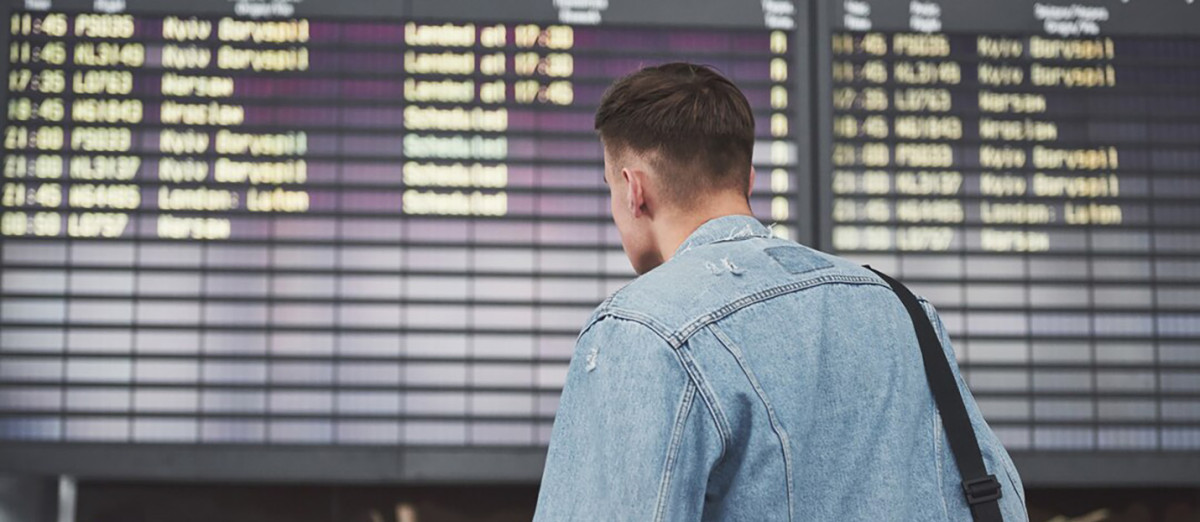
A delayed or cancelled flight can ruin the start or end of a trip, but you may be entitled to money back when things go wrong.
Under UK passenger-rights rules, eligible travellers can claim flight compensation when a flight is significantly delayed or cancelled for reasons within the airline’s responsibility.
Depending on the distance travelled and length of the disruption, compensation can reach £520 per passenger.
But compensation isn’t automatic, and not every delay qualifies.
This guide explains when you can claim flight compensation, how much you could receive, what evidence to keep and what to do if the airline rejects your claim.
When Can You Claim Flight Compensation?
Your rights depend on your route, airline and what caused the disruption.
Under UK261, you may be able to claim flight compensation for a delay when you arrive at your final destination more than three hours late and the disruption was within the airline’s responsibility.
UK passenger-rights legislation generally covers flights:
- Departing from a UK airport
- Arriving in the UK on a UK or EU airline
- Arriving in the EU on a UK airline
Different rules can apply to other journeys, so check which passenger-rights regime covers your particular flight.
The UK Civil Aviation Authority’s passenger-rights guidance is a useful starting point if you’re unsure.
How Much Flight Compensation Can You Claim?
If you can claim flight compensation under UK261, the amount isn’t calculated according to how much you paid for your ticket.
Instead, compensation is based primarily on the distance of the flight and, for longer flights, the length of your arrival delay.
Current UK compensation amounts are:
- Under 1,500km: £220 per passenger
- 1,500km to 3,500km: £350 per passenger
- Over 3,500km and arriving three to four hours late: £260 per passenger
- Over 3,500km and arriving more than four hours late: £520 per passenger
These are fixed compensation amounts for eligible delays.
That means someone travelling on a cheap promotional ticket could potentially receive more in compensation than they originally paid for the flight.
You can check the latest amounts through the CAA’s flight delay guidance.
What Counts as a Three-Hour Flight Delay?
The important time for compensation is generally when you arrive at your final destination, not simply how late the aircraft departed.
A flight could leave more than three hours late but recover some time during the journey.
Likewise, disruption involving connecting flights can become more complicated.
Keep your original booking confirmation and make a note of when you actually arrived.
If you’re unsure whether the delay meets the requirements, check with the airline or use the CAA’s passenger-rights information before submitting your claim.
Can You Claim Flight Compensation for a Cancellation?
You may also be able to claim flight compensation when an airline cancels your flight.
Under UK rules, fixed compensation can potentially apply when you receive less than 14 days’ notice of the cancellation.
Whether you can claim flight compensation depends on several factors, including:
- How much notice the airline gave you
- Why the flight was cancelled
- Whether you were offered an alternative flight
- The departure and arrival times of that alternative
If a covered flight is cancelled, the airline must also offer you a choice between a refund or alternative transport under the applicable rules.
That’s separate from whether you’re entitled to additional compensation.
The CAA’s cancellation guidance explains the different cancellation scenarios in detail.
Compensation, Refunds and Expenses Are Different
This is one of the most important things to understand when you claim flight compensation.
Compensation is a fixed payment for eligible disruption.
A refund returns money you’ve paid for a flight you won’t be taking.
Reimbursement of expenses covers reasonable costs you had to pay because of the disruption when the airline should have provided care.
Depending on what happened, you could have rights in more than one of these categories.
Don’t assume receiving a meal voucher means you can’t claim compensation, for example.
Equally, being entitled to a refund doesn’t automatically mean you’re entitled to the fixed £220–£520 compensation payments.
What If Your Flight Is Delayed for Five Hours?
If your covered flight is delayed for more than five hours and you decide not to travel, you can choose a refund rather than continuing with the journey.
Where applicable, this can also include a flight back to your original departure point if you’ve already completed part of a connecting journey.
If you decide to continue travelling despite the delay, you may still be able to claim flight compensation if the eligibility requirements are satisfied.
Make sure you understand the consequences before accepting a refund and abandoning the journey.
Your Right to Food, Drink and Accommodation
Compensation isn’t the only protection available during a long delay.
If UK261 applies, the airline has a duty to look after you once the delay reaches certain thresholds.
According to the CAA, care applies after:
- Two hours for flights under 1,500km
- Three hours for flights between 1,500km and 3,500km
- Four hours for flights over 3,500km
Depending on the circumstances, the airline should provide reasonable food and drink and a means of communication.
If the disruption requires an overnight stay, you may also be entitled to hotel accommodation and transport between the airport and hotel.
If the airline can’t arrange this and you have to pay yourself, keep receipts for reasonable expenses.
Luxury accommodation and alcohol are unlikely to be considered reasonable.
When Can’t You Claim Flight Compensation?
Not every long delay or cancellation produces a right to compensation.
Airlines aren’t generally required to pay fixed compensation when the disruption was caused by extraordinary circumstances that couldn’t have been avoided even if reasonable measures had been taken.
Examples can include:
- Severe weather incompatible with safely operating the flight
- Air traffic control decisions
- Political or civil unrest
- Security risks
- Certain strikes unrelated to the airline
- Bird strikes
- Certain hidden manufacturing defects
Each case depends on its circumstances.
An airline simply describing something as an extraordinary circumstance doesn’t necessarily settle the issue. If you disagree with its explanation, you can ask for more information and potentially escalate your complaint.
How to Claim Flight Compensation From the Airline
The simplest approach is usually to claim flight compensation directly from the airline first.
The UK Civil Aviation Authority recommends contacting the airline directly rather than immediately using a claims company.
Visit the airline’s website and look for its flight disruption, passenger rights, complaints or compensation section.
Many airlines provide an online claim form.
You’ll normally need information such as:
- Passenger name
- Booking reference
- Flight number
- Departure and destination airports
- Scheduled travel date
- Details of the delay or cancellation
- Contact information
Explain clearly what happened and state that you’re requesting compensation under the relevant passenger-rights rules.
Keep Evidence From the Disruption
Good records make it easier to claim flight compensation and challenge a rejection if necessary.
Keep your:
- Booking confirmation
- Boarding pass
- Emails and text messages from the airline
- Screenshots from the airline app
- Receipts for reasonable expenses
- Correspondence concerning your claim
It can also be useful to record the actual arrival time and any explanation the airline gives for the disruption.
Don’t throw everything away as soon as you get home.
Claim Directly Before Paying a Claims Company
You don’t normally need to pay someone to make the initial claim.
The CAA recommends contacting the airline first and warns that claims agencies can charge fees representing a significant proportion of the compensation recovered.
If the airline provides a straightforward online form, submitting the claim yourself could mean you keep the full amount you’re entitled to.
Some travellers may still prefer a third-party claims service because they don’t want to manage the process themselves.
If you choose that route, check the company’s fees, terms and authority to act for you before agreeing.
What If the Airline Rejects Your Claim?
If an airline rejects your attempt to claim flight compensation, the process isn’t necessarily over.
First, read the airline’s explanation carefully.
If it claims extraordinary circumstances, consider whether the reason given appears consistent with the CAA’s guidance.
If you believe you still have a valid claim, reply with the relevant evidence and ask the airline to reconsider.
If the dispute remains unresolved, you may be able to take it to an Alternative Dispute Resolution (ADR) provider.
The CAA says aviation consumers can currently use the AviationADR and CEDR schemes where applicable.
If the airline isn’t covered by an appropriate ADR scheme, the CAA’s Passenger Advice and Complaints Team may be able to help with certain complaints.
See the CAA’s guide to making a complaint for the appropriate escalation route.
How Long Should You Wait for the Airline?
Give the airline a reasonable opportunity to investigate and respond.
If you’re unhappy with its response, or it hasn’t replied within eight weeks, you may be able to escalate the complaint through the appropriate ADR provider or the CAA, depending on the airline.
Keep copies of every message and note when you submitted the original claim.
That makes it much easier to demonstrate what has happened if the dispute needs to be escalated.
How Long Do You Have to Claim?
Don’t deliberately leave a valid claim sitting around.
Time limits can depend on the legal jurisdiction and the route you eventually use to pursue the dispute.
For ADR, the CAA currently states that it can deal with incidents from within the previous six years, or five years if you live in Scotland, subject to additional deadlines for submitting the dispute after an airline’s final response.
Because different legal routes can have different limitation periods, it’s sensible to claim flight compensation as soon as reasonably practical rather than relying on the maximum possible deadline.
Should You Use a Flight Compensation Claims Service?
You can claim flight compensation yourself, and that’s the route we’d suggest trying first.
However, you may decide that you’d rather have somebody else handle the process, particularly if your claim has become complicated or you don’t want to spend time dealing with the airline.
Claims services generally take a fee if they’re successful, so read the terms carefully and compare what you’ll pay with the convenience you’re receiving.
TravelHype readers who prefer this approach can check their flight with Compensair and review the service’s current eligibility criteria and fees before deciding whether to proceed.
TravelHype Verdict: Claim Directly First
If an eligible flight is seriously delayed, cancelled at short notice or you’re denied boarding, knowing your passenger rights could be worth hundreds of pounds.
Before you claim flight compensation, check whether UK261 or another applicable passenger-rights regime covers your journey.
Keep your documents, establish what caused the disruption and claim flight compensation directly from the airline where possible.
If the airline rejects a claim you believe is valid, investigate ADR or the appropriate CAA complaints route rather than immediately giving up.
A third-party claims service remains an option if you’d prefer someone else to handle the process, but understand its fees before agreeing.
If you’d rather have a service assess and manage the claim for you, you can check your eligibility with Compensair.
And when it’s time to plan your next journey, you can find flights, search for hotels and compare car hire with TravelHype.


Comment (0)