
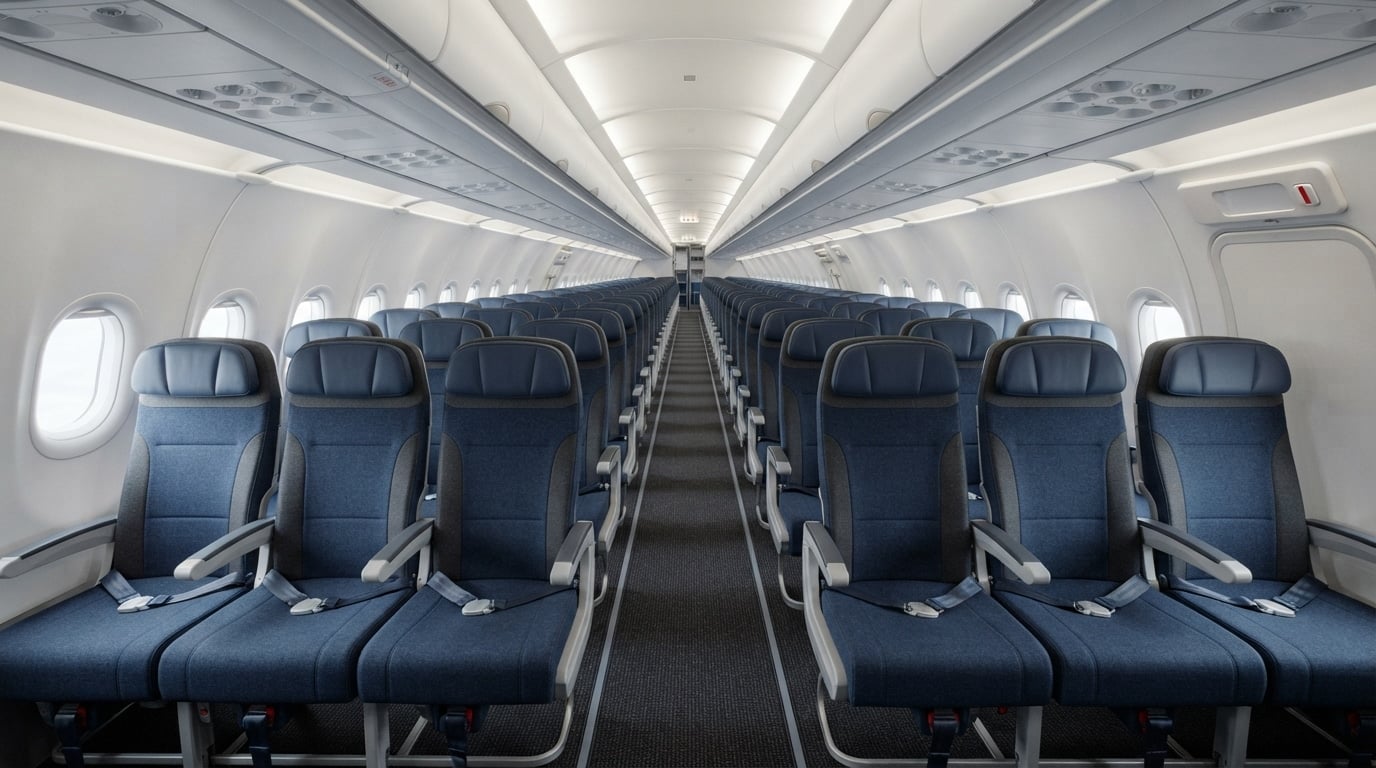
Choosing the best seats on a plane can make a noticeable difference to your comfort, especially when you’re travelling on a long flight. Whether you prefer extra legroom, a quieter cabin or a window seat with a view, where you sit can influence your overall flying experience.
With airlines offering different seating layouts and charging extra for certain seats, knowing what to look for can help you make a better decision before your next trip.
From avoiding busy areas of the cabin to finding more comfortable places to sit, this guide explains how to choose the best seats on a plane for your journey.
Best Seats on a Plane: What Should You Look For?
The best seats on a plane depend on your personal preferences, the aircraft you’re flying on and how long you’ll be in the air.
Some passengers prioritise legroom, while others want easy access to the aisle or a quieter place to rest.
Before choosing your seat, consider:
- Flight duration: Longer journeys may make additional legroom more valuable.
- Seat location: The front, middle and rear of the aircraft can offer different experiences.
- Window or aisle: Your preferred position can affect comfort and convenience.
- Nearby facilities: Toilets and galleys may create additional noise and foot traffic.
- Seat selection fees: Some airlines charge extra to reserve particular seats.
Understanding these differences can help you find a seat that suits your needs without unnecessarily increasing your travel costs.
How to Choose the Best Seats on a Plane
There isn’t one perfect seat for every passenger. However, understanding the advantages and disadvantages of different areas can make choosing your seat much easier.
The following nine tips will help you identify the best seats on a plane based on comfort, convenience and your travel requirements.
1. Choose a Window Seat for Views and Privacy
Window seats are popular with travellers who enjoy watching the scenery during take-off and landing.
For passengers who appreciate privacy and uninterrupted rest, the best seats on a plane are often next to the window.
They can also be a good option for passengers who want to rest without other people needing to pass them to access the aisle.
Advantages of window seats include:
- Enjoying views of the landscape and clouds.
- Having a wall to lean against when resting.
- Avoiding interruptions from passengers moving along the aisle.
- Having more control over the window shade, where fitted.
However, window seats can be less convenient if you need to get up regularly during the flight.
On longer journeys, consider how often you’re likely to leave your seat before deciding.
2. Pick an Aisle Seat for Easier Movement
An aisle seat can be an excellent choice if you prefer to move around during your flight.
For passengers who value convenience, the best seats on a plane may be those offering easy access to the aisle.
An aisle seat allows you to stand up without asking neighbouring passengers to move and makes visiting the toilets more convenient.
Aisle seats are particularly useful for travellers who want to stretch their legs during longer journeys.
The main disadvantage is that passengers and cabin crew may occasionally brush past your seat when moving through the cabin.
If convenience matters more than having a window view, an aisle seat could be the better option.
3. Sit Near the Wings for a Steadier Feeling
If you’re concerned about turbulence, seats near the aircraft’s wings may be worth considering.
Some of the best seats on a plane for passengers who dislike noticeable aircraft movement are located near the wings.
This area is generally closer to the aircraft’s centre of gravity, meaning certain movements can feel less pronounced than towards the rear of the plane.
However, sitting near the wings doesn’t eliminate turbulence, and conditions can vary considerably between flights.
The wing position can also restrict your view from the window.
For passengers who prefer a steadier-feeling journey, this section of the aircraft can be a sensible choice.
Remember to keep your seatbelt fastened whenever you’re seated, even when the seatbelt sign is switched off.
4. Consider the Front of the Aircraft for a Quieter Flight
Seats towards the front of an aircraft can offer a more comfortable experience for some passengers.
Depending on the aircraft and engine position, this area may experience less engine noise than seats further back.
Some travellers consider the best seats on a plane to be near the front because they offer a combination of convenience and potentially reduced engine noise.
Sitting near the front can also make disembarking quicker when passengers leave through the forward doors.
However, the advantages depend on the aircraft layout, boarding arrangements and whether the airline charges extra for forward seats.
If you want to leave the plane quickly or prefer a quieter environment, consider checking the seating plan before booking.
5. Look for Extra Legroom Seats
Extra legroom can make a significant difference on longer flights, particularly for taller passengers.
For travellers who need additional space, the best seats on a plane often include extra legroom options.
Some airlines offer additional space in selected rows, including seats near emergency exits and certain bulkheads.
However, these seats may come with restrictions.
For example:
- Emergency exit seats have specific passenger eligibility requirements.
- Some seats have fixed armrests.
- Under-seat baggage storage may be restricted.
- Seats near partitions may have different legroom or storage arrangements.
Extra legroom seats can also cost more than standard seating.
Before paying, check the airline’s description to understand exactly what you’re getting.
6. Avoid Seats Near Toilets and Galleys
Seats close to aircraft toilets and kitchen areas can be less peaceful, particularly on busy flights.
Passengers may gather nearby while waiting for facilities, and cabin crew may need to move equipment or prepare refreshments.
If you’re hoping to sleep, the best seats on a plane are generally those away from busy areas of the cabin.
Potential disadvantages of sitting near toilets and galleys include:
- Additional noise during the flight.
- Passengers standing close to your seat.
- Frequent movement through the aisle.
- Disturbances when trying to sleep.
However, these seats may suit travellers who appreciate being close to the toilets.
The best choice depends on whether you value convenience or a quieter environment.
7. Check the Aircraft Seating Plan Before Booking
One of the easiest ways to identify the best seats on a plane is to review the aircraft’s seating plan before selecting your seat.
Different aircraft can have noticeably different cabin layouts, even when operated by the same airline.
Checking the seating plan can help you locate the best seats on a plane without relying entirely on general recommendations.
Look for details such as:
- Seat pitch and available legroom.
- Window alignment.
- Emergency exit rows.
- Toilets and galley locations.
- Seats with limited recline.
- Unusual seating arrangements.
The airline’s own seating plan is a useful starting point.
You can also use specialist aircraft seating websites such as AeroLOPA to explore cabin layouts.
Remember that airlines occasionally change aircraft, so your allocated seat or seating arrangement may change before departure.
8. Think Carefully Before Paying for Seat Selection
Many airlines charge passengers to select seats in advance, particularly when booking cheaper fares.
Although paying for your preferred seat can be worthwhile, it isn’t always necessary.
You don’t always need to pay extra to find the best seats on a plane for your particular journey.
If you don’t select a seat, the airline may automatically allocate one during check-in or before departure.
However, you may have less choice and aren’t necessarily guaranteed to sit beside other adults travelling with you.
Before paying, consider:
- Whether your ticket already includes seat selection.
- How important a particular seat is to you.
- The length of the flight.
- Whether you’re travelling alone or with others.
- The difference between standard and premium seat prices.
Always check the airline’s current policy before booking, as charges and conditions can vary.
For more ways to reduce travel costs, read our guide on How to Find Cheap Flights.
9. Choose Suitable Seats When Travelling With Children
Travelling with children can make seat selection particularly important.
The best seats on a plane for families depend on the children’s ages, seating requirements and the airline’s arrangements.
Many airlines have policies designed to keep younger passengers close to accompanying adults, but the details vary.
Before booking, check the airline’s family seating arrangements and whether any additional charges apply.
The UK Civil Aviation Authority provides guidance about seating families together, although individual airline policies and applicable requirements should always be checked.
If you’re travelling with young children, consider choosing seats that make it easier to supervise them and access essential items during the flight.
For families with infants, some long-haul aircraft also provide bassinet positions, although availability and eligibility requirements vary.
Contact your airline before departure if you have specific seating requirements.
Which Seats Are Best for Long-Haul Flights?
On long-haul journeys, comfort becomes particularly important because you may spend several hours in the same seat.
The best seats on a plane for a long flight will depend on whether you prioritise sleep, space or convenience.
Best for Sleeping
Window seats can provide a more private space and allow you to rest without being disturbed when neighbouring passengers leave their seats.
Consider avoiding busy areas near toilets and galleys if you’re hoping to sleep.
Best for Legroom
Seats offering additional legroom may be worth the extra cost, especially on overnight flights.
Check the actual seating arrangement rather than assuming every emergency exit or bulkhead seat provides the same benefits.
Best for Moving Around
Aisle seats allow you to stand, stretch and walk around without disturbing neighbouring passengers.
This can be particularly helpful during longer journeys, when regular movement is beneficial.
Best for Travelling Together
If you’re flying with a partner or friend, consider the seating arrangement carefully.
Some wide-body aircraft have pairs of seats towards the rear of the cabin, while others use different configurations.
Check the aircraft seating plan to identify arrangements that suit your travelling group.
Are the Back Seats on a Plane Bad?
Not necessarily. Although rear seats sometimes have a reputation for being less desirable, they can still be perfectly comfortable.
Depending on the aircraft, the rear cabin may be closer to toilets and galleys, and some passengers may notice more aircraft movement during turbulence.
However, rear seating can occasionally offer advantages, including certain two-seat configurations or more available seating choices.
The best seats on a plane aren’t necessarily always located near the front, so it’s worth checking the specific layout rather than automatically avoiding the back.
How to Make Any Plane Seat More Comfortable
Even if you don’t manage to reserve your preferred seat, a few simple preparations can improve your flight.
Dress Comfortably
Choose comfortable clothing and consider bringing an additional layer, as cabin temperatures can vary.
Pack Essential Items Within Reach
Keep important belongings, such as medication, headphones and travel documents, somewhere accessible.
Always follow the airline’s rules about cabin baggage and where items can be stored.
For additional advice, read our guide on How to Avoid Excess Baggage Fees.
Move Around When Appropriate
On longer flights, change position regularly and walk around when it’s safe and permitted.
Follow cabin crew instructions and keep your seatbelt fastened when seated.
Bring Suitable Travel Accessories
A travel pillow, eye mask and noise-reducing headphones can make longer journeys more comfortable.
Choose items that are easy to carry and suitable for your airline’s hand luggage allowance.
Is It Worth Paying Extra for the Best Seats on a Plane?
Paying for seat selection can be worthwhile if you have a strong preference or need a particular seating arrangement.
For example, extra legroom may improve comfort on a long-haul flight, while a window seat could be important if you want to rest.
However, on shorter journeys, a standard allocated seat may be perfectly adequate.
Rather than paying automatically, compare the additional cost with the actual benefits.
You may prefer to put that money towards accommodation, activities or other parts of your trip.
Final Thoughts
Choosing the best seats on a plane comes down to understanding your priorities and checking the aircraft’s seating arrangements before travelling.
Window seats offer views and privacy, aisle seats provide convenience, and seats near the wings may feel steadier during turbulence.
For longer flights, choosing the best seats on a plane with additional legroom or a quieter cabin location can make a noticeable difference.
Before paying extra for a particular seat, consider the length of your journey, the airline’s seating policy and whether the benefits justify the additional cost.
Ultimately, the best seats on a plane depend on your comfort, budget and personal preferences.
Planning your next trip? Visit TravelHype to explore travel options and read our airport security tips to help make your next journey more enjoyable.


Comment (0)